Sycoparrotia semidecidua Purple Haze
Sycoparrotia semidecidua Purple Haze
Sycoparrotia semidecidua Purple Haze
Sycoparrotia semidecidua Purple Haze
Sycoparrotia semidecidua Purple Haze
Sycoparrotia semidecidua Purple Haze
Sycoparrotia semidecidua Purple Haze
Sycoparrotia semidecidua Purple Haze
Sycoparrotia semidecidua Purple Haze
Sycoparrotia semidecidua Purple Haze
Sycoparrotia semidecidua Purple Haze
Un albero molto bello in divenire. Ha già preso bene il suo posto.
Nath44, 05/11/2024
Vedi altre varietà simili in stock
Vedi tutti →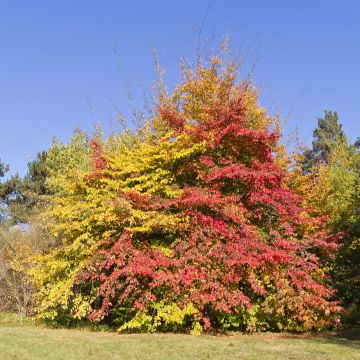
Disponibile in 2 taglie
Disponibile in 2 taglie
Disponibile in 2 taglie
Disponibile in 2 taglie
24 mesi garanzia di permuta su questa pianta
Altre informazioni
Garantiamo la qualità delle nostre piante per un intero ciclo di crescita e sostituiremo a nostre spese qualsiasi pianta che non si riprenda nelle normali condizioni climatiche e di impianto.

Questa pianta è adatta al mio giardino?
Creo il mio profilo Plantfit →
Descrizione del prodotto
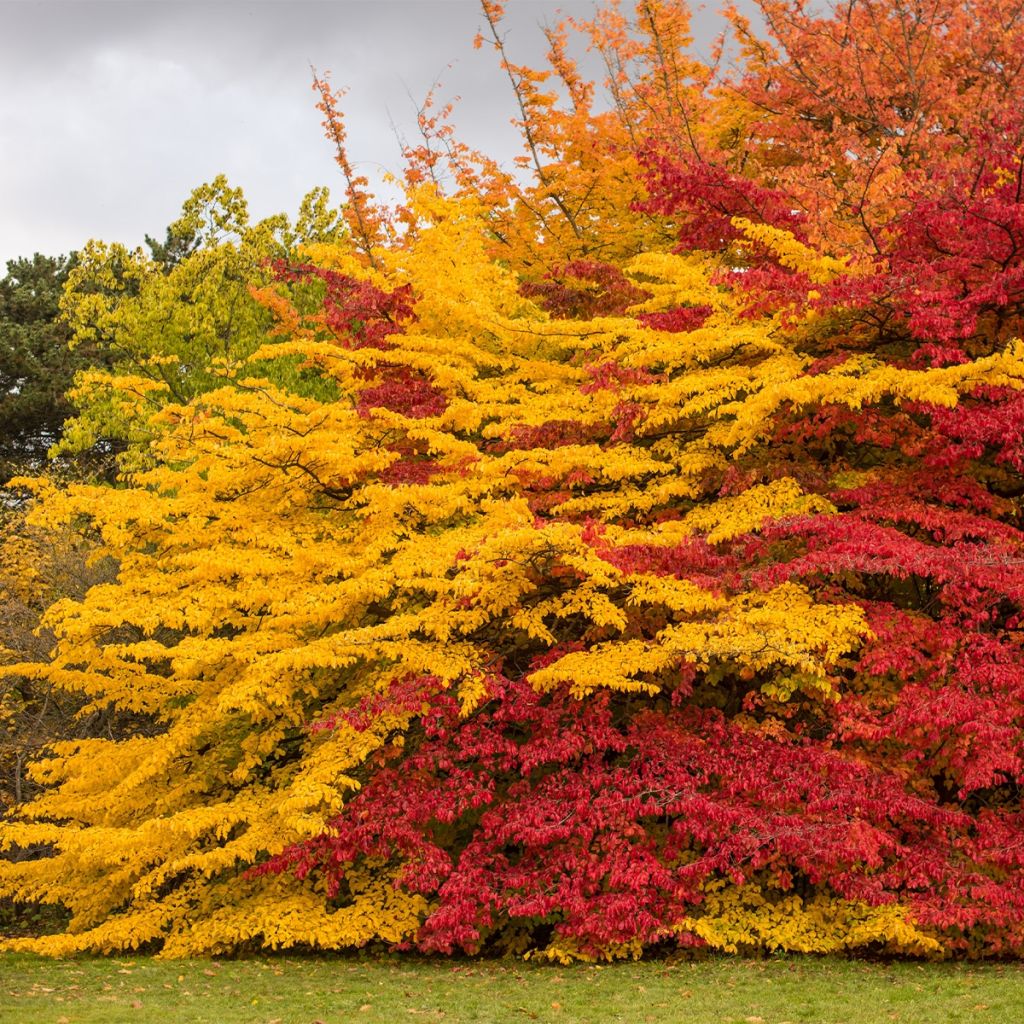
The (x) Sycoparrotia semidecidua ‘Purple Haze’ belongs, like its two parents, to the hamamelidaceae family. Less known than the Parrotia persica, deciduous and native to Northern Iran and Eastern Caucasus, its second parent the Sycopsis sinensis, native to the Chinese mountains, has the advantage of having evergreen foliage. The result of this marriage, discovered and first described in Switzerland in 1968, is a large shrub reaching 3 to 4 m in height by 4 to 6 m in width, whose foliage and shape exhibit characteristics intermediate between those of their two parents. With a narrow and upright shape when young, the shrub over time develops a broadly oval and very dense canopy. Its foliage is deciduous below -10°C and its growth rate is moderate.
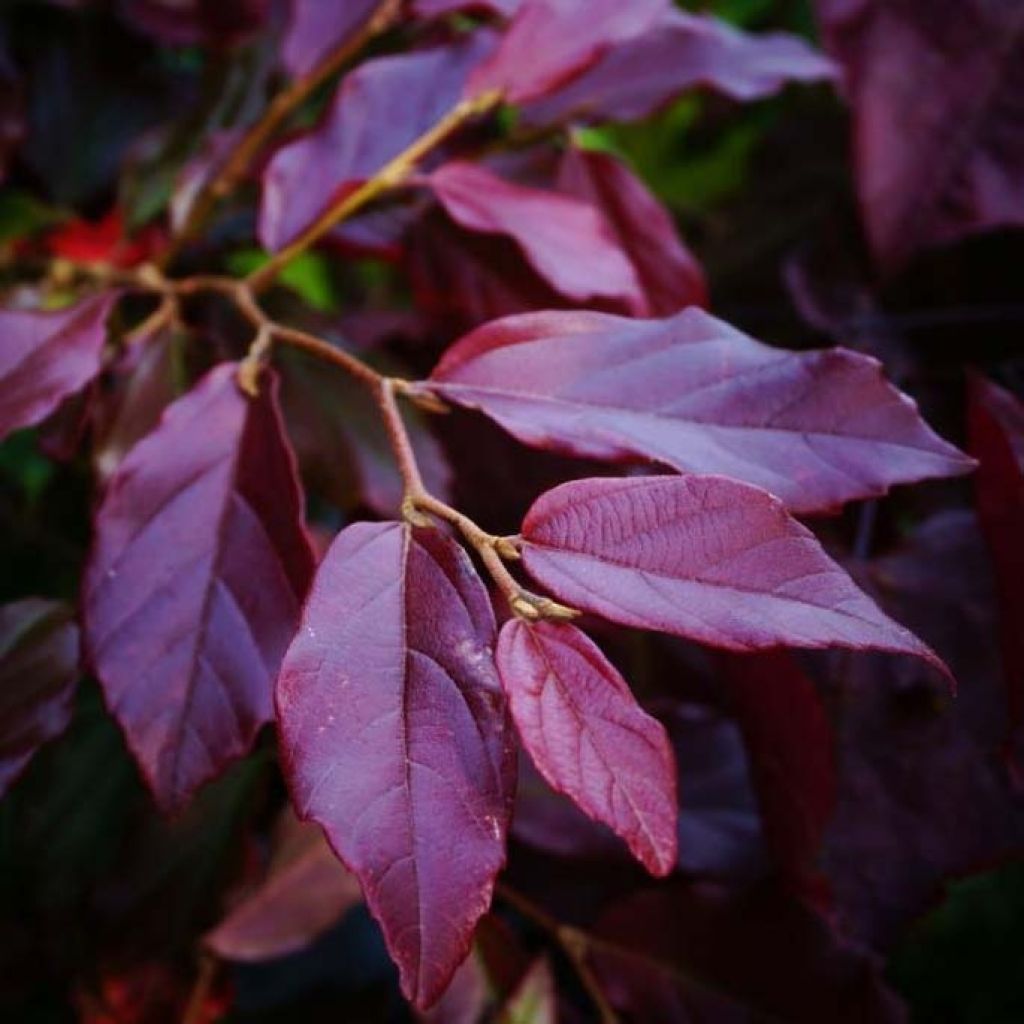
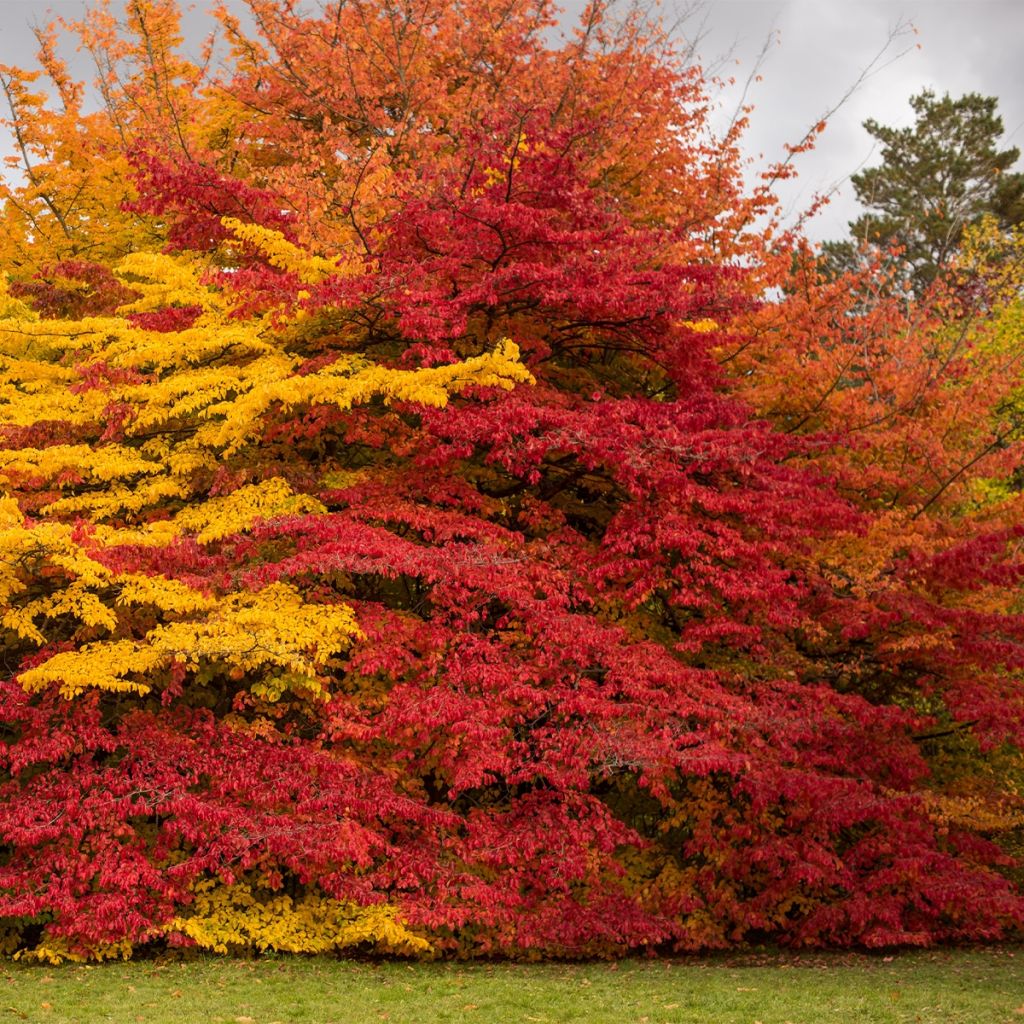
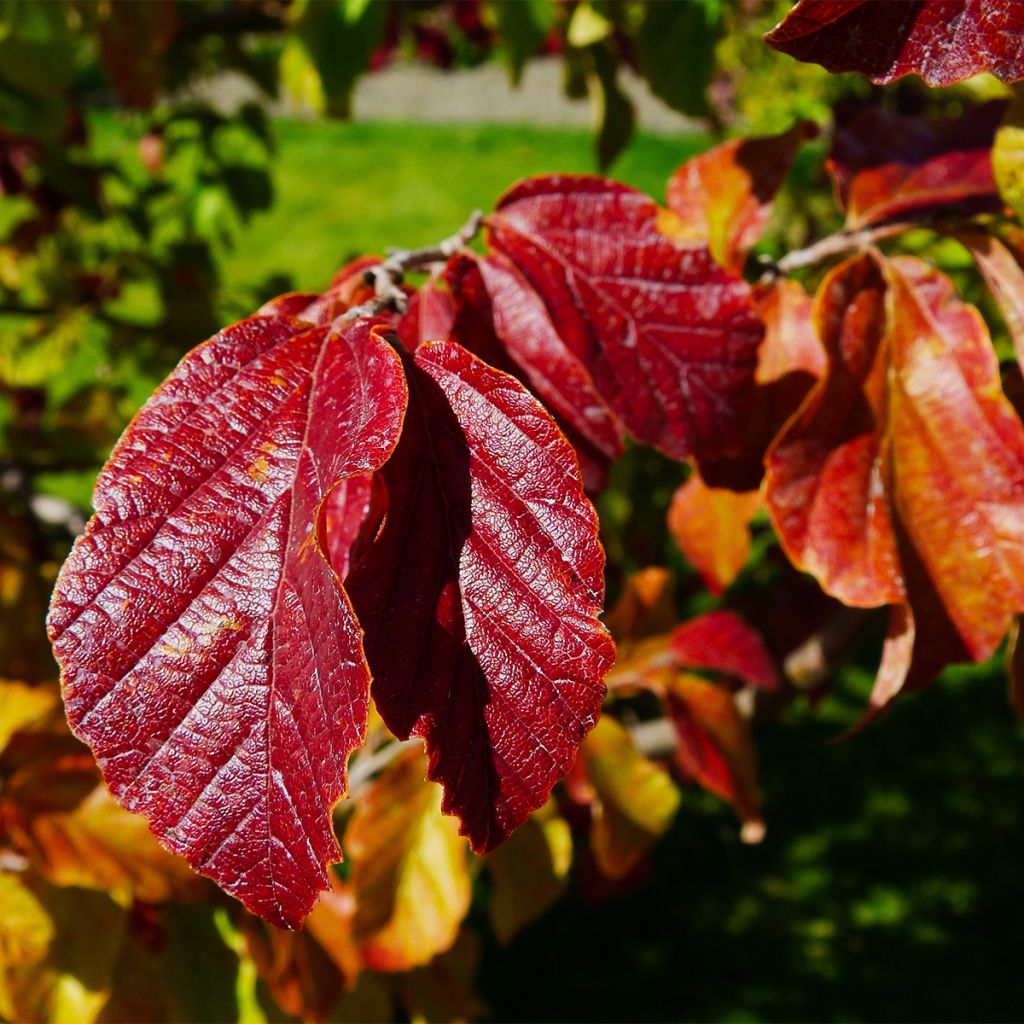
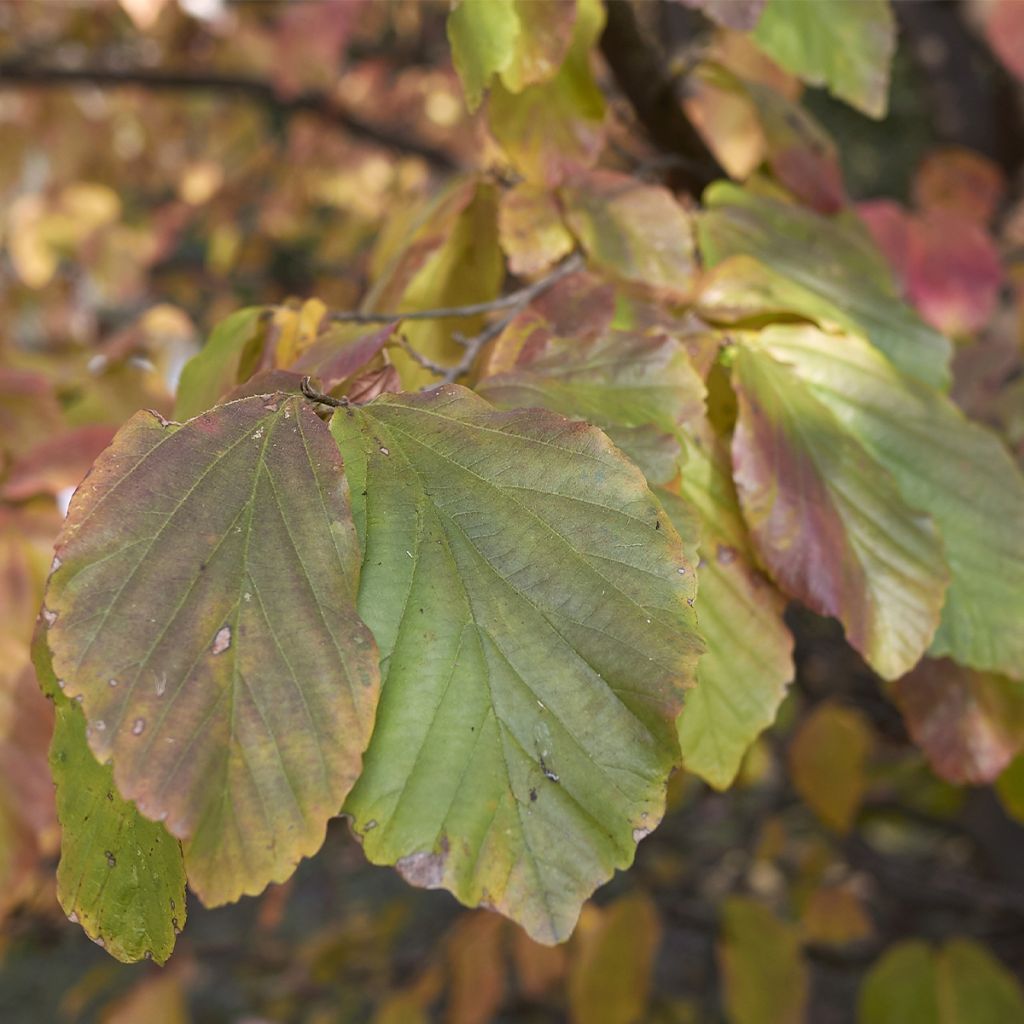
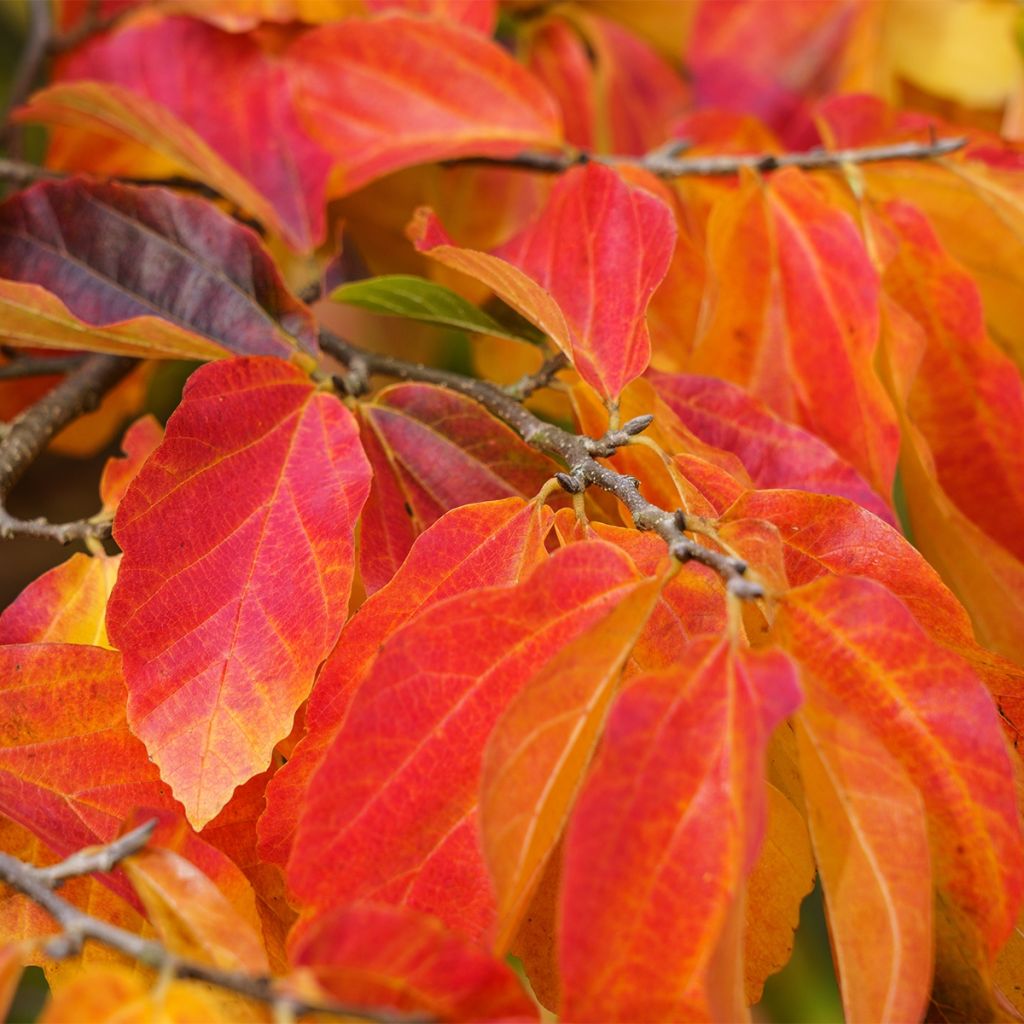
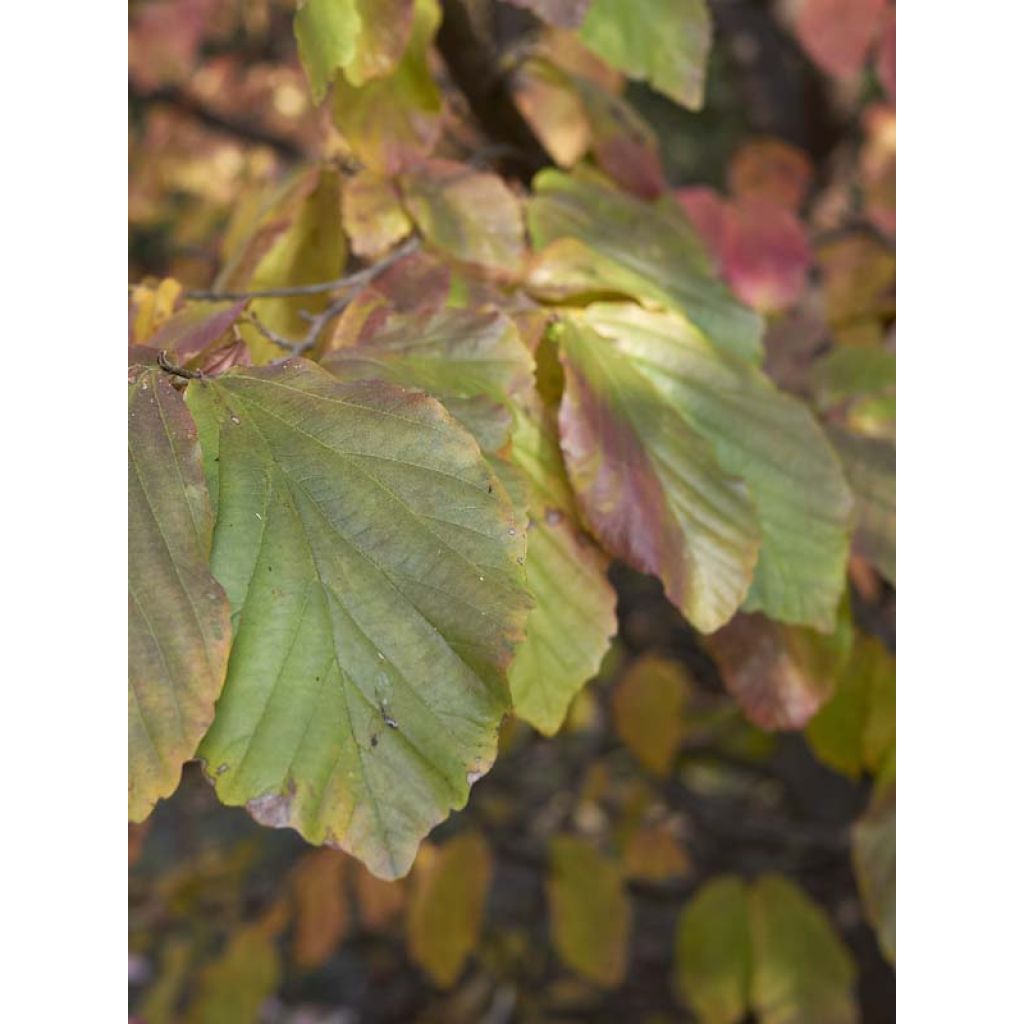
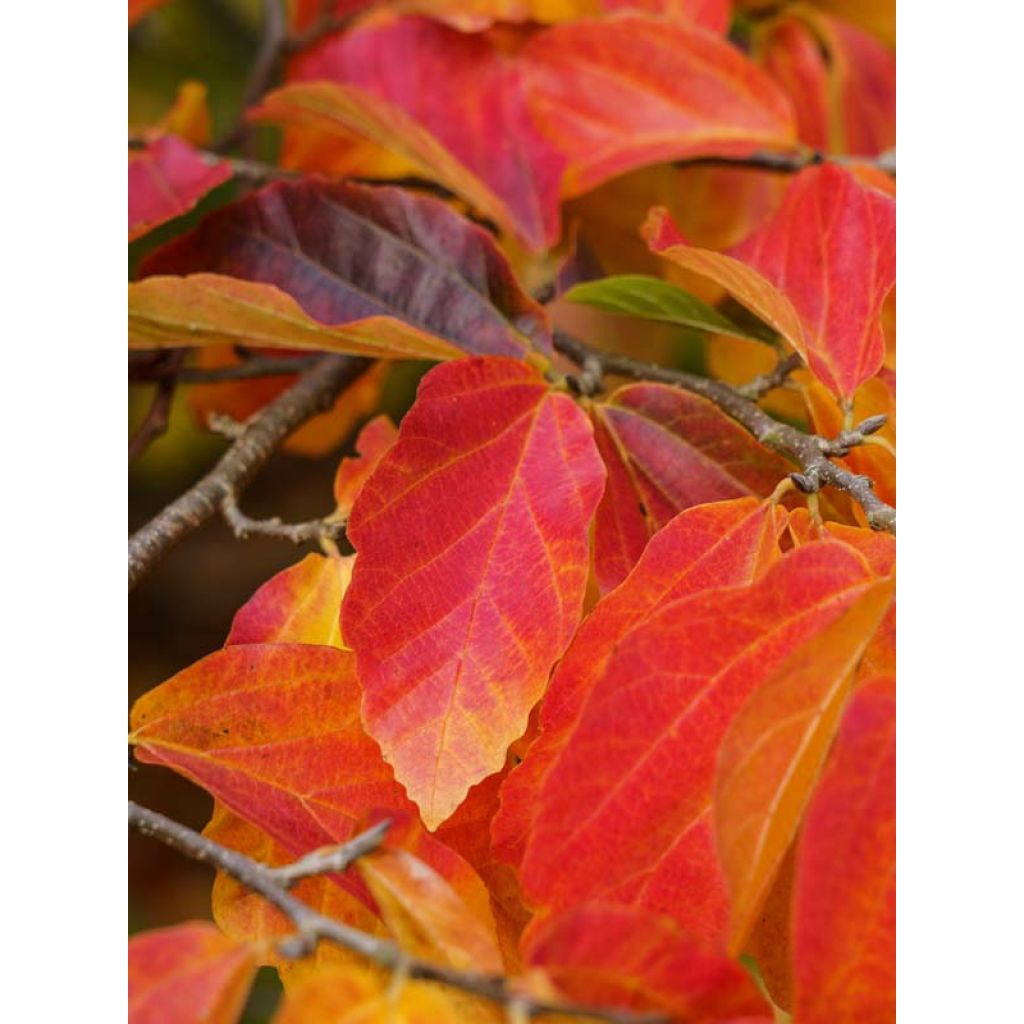
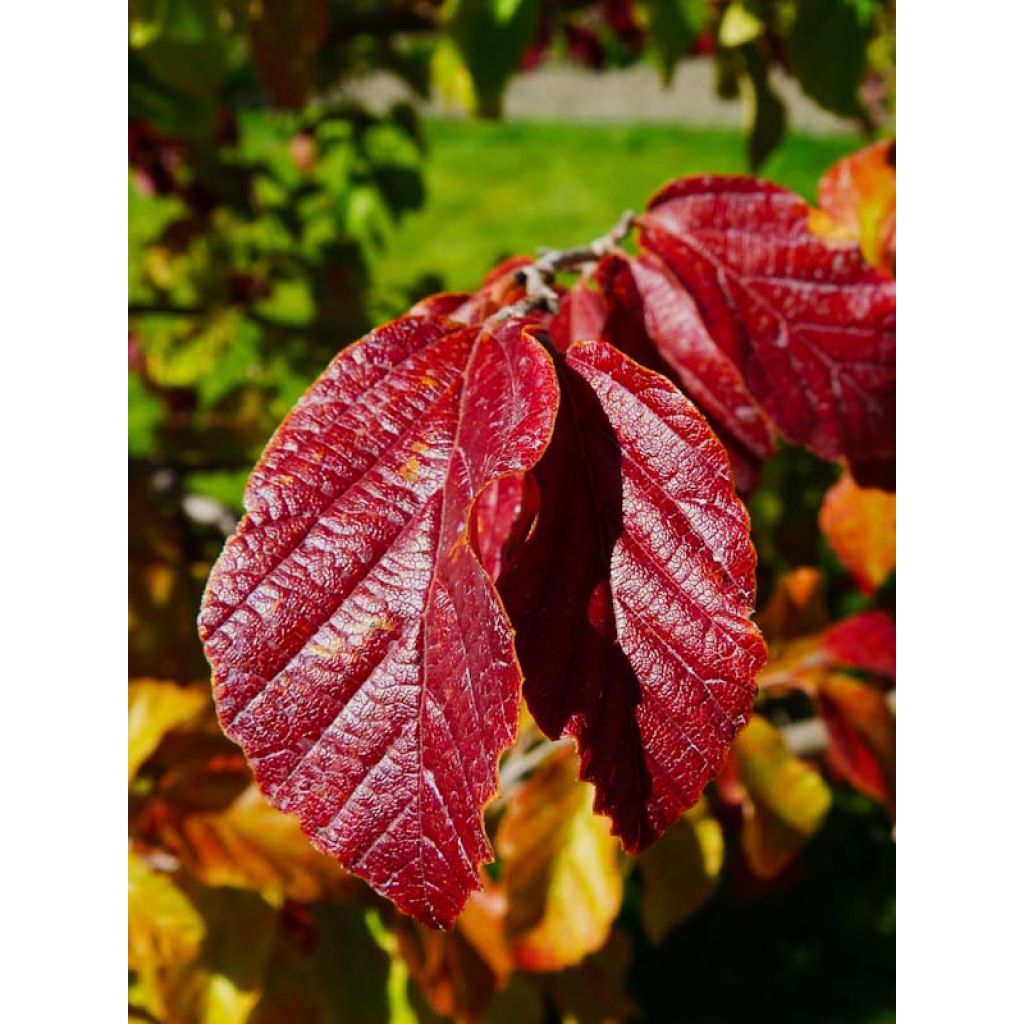
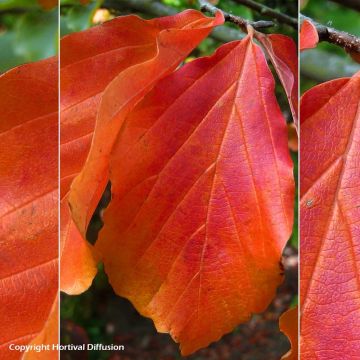
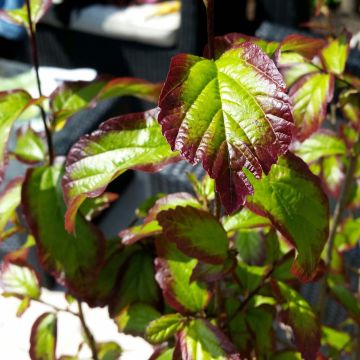
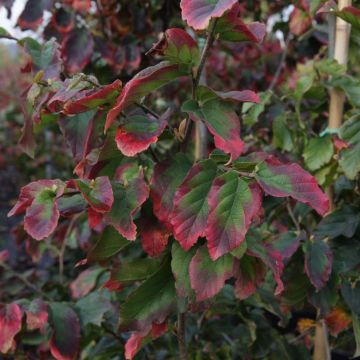
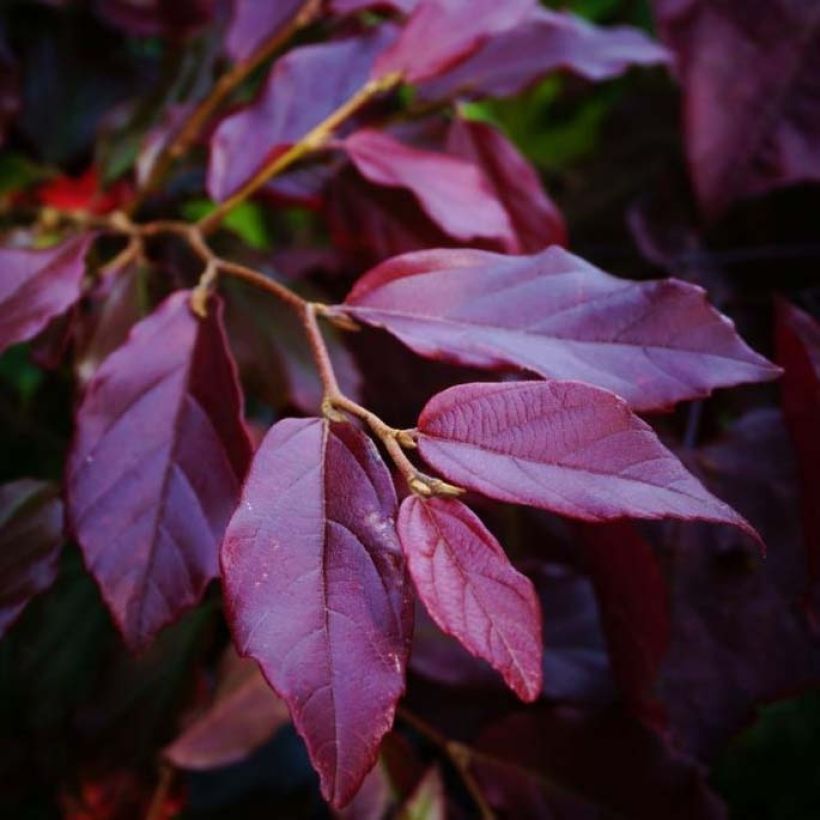
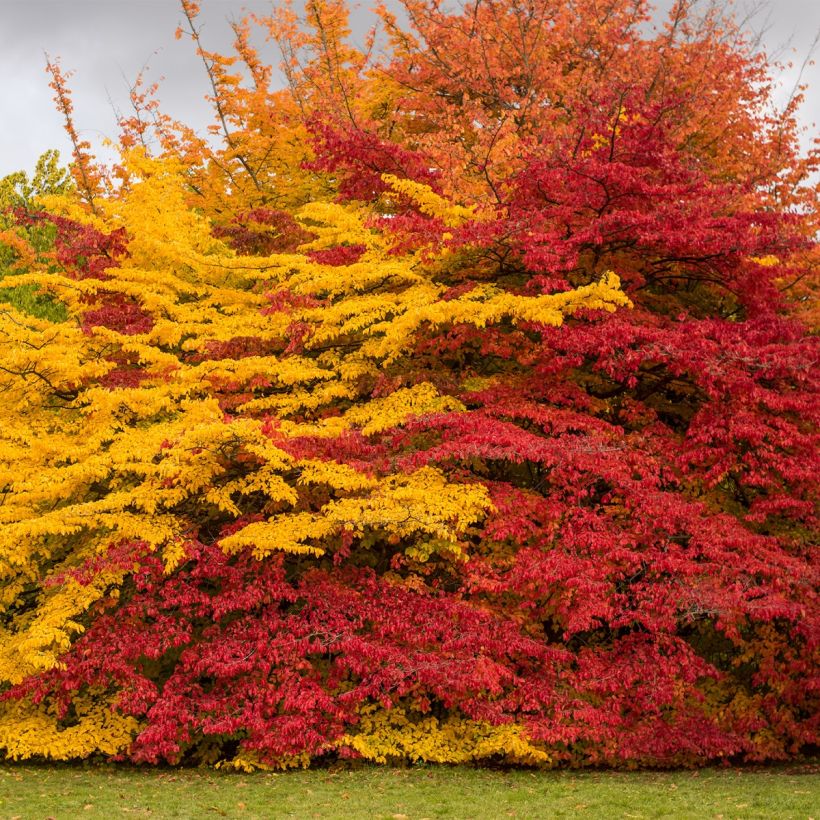
The Sycoparrotia semidecidua ‘Purple Haze’ features a sturdy trunk and often naturally forms several trunks covered with a brown-grey bark. Its leaves arranged alternately on the branches are simple, elliptic to oblong, entire or toothed at the edges, shiny dark green on top, lighter underneath. Dark red in spring, the leaves turn dark green during summer. Then autumn arrives, bringing an explosion of colours: the leaves of Sycoparrotia semidecidua ‘Purple Haze’ transition, alternately from purple to scarlet red before turning golden yellow. Ultimately, as winter sets in, it takes on purple hues. The non-fragrant flowering occurs in February-March, at the leaf axils, in the form of slightly discreet reddish flowers, clustered in bunches. Each flower consists of stamens with yellow-green anthers surrounded by small violet-brown bracts. The fruit of this shrub is a capsule.
The Sycoparrotia semidecidua‘Purple Haze’ naturally finds its place isolated in a small garden, in a free hedge, or even in a shrub grove. For example, associate it with heathers, camellias, Hamamelis, Leucothoe, and pieris in acidic soil. In neutral or slightly alkaline, well-draining soil, pair it for instance with the 'Grace' smoke tree (Cotinus coggygria 'Grace'), the katsura tree (Cercidiphyllum japonicum), the winged spindle tree (Euonymus alatus), Nandina, large autumn asters and Japanese anemones to create a vibrant grove from September to November.
Segnala un errore nella descrizione del prodotto
Sycoparrotia semidecidua Purple Haze in foto...
Porto
Fioritura
Fogliame
Piantagione e cura
Quando piantare?
Per quale località?
Trattamenti
-
, ilAcquista verificato
Risultato il Promesse de fleurs
Prodotti visualizzati di recente
Non hai trovato quello che cercavi?
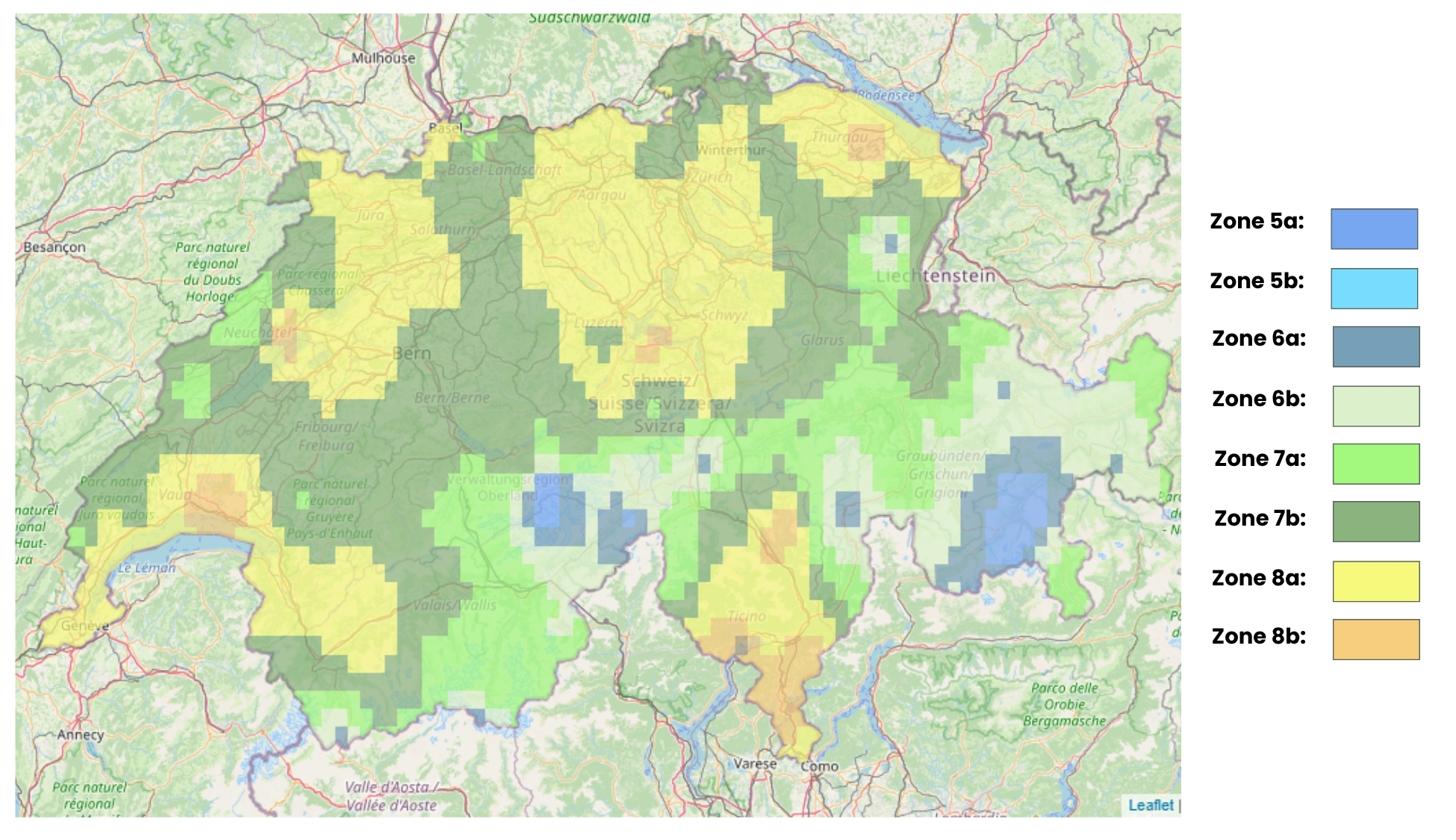
La rusticità è la temperatura invernale più bassa che una pianta può sopportare senza subire gravi danni o addirittura morire. Tuttavia, la rusticità è influenzata dalla posizione (zona riparata, come un patio), dalla protezione (copertura invernale) e dal tipo di terreno (la rusticità è migliorata da un terreno ben drenato).
I periodi di semina indicati sul nostro sito web si riferiscono a Paesi e regioni all'interno della Zona USDA 8 (Francia, Regno Unito, Irlanda, Paesi Bassi).
Nelle zone più fredde (Scandinavia, Polonia, Austria...), ritardare le semine all'aperto di 3-4 settimane o seminare sotto vetro.
Nei climi più caldi (Italia, Spagna, Grecia, ecc.), anticipare la semina all'aperto di qualche settimana.
Il periodo di fioritura indicato sul nostro sito web si riferisce alle regioni situate nelle zone USDA 7b–8a (Altopiano centrale e Arco del Lemano: Zurigo, Berna, Basilea, Losanna, Ginevra).
Esso varierà a seconda del luogo di residenza:
- In Ticino e nelle valli meridionali (Lugano, Locarno, Bellinzona, Mendrisio), la fioritura sarà anticipata di 2-4 settimane rispetto alle date indicate, grazie a una marcata influenza mediterranea che mitiga gli inverni e rende le primavere particolarmente precoci.
- Nelle Alpi e nelle Prealpi (Davos, St. Moritz, Zermatt, Interlaken, Coira), la fioritura sarà ritardata di 4-6 settimane. Avverrà principalmente tra giugno e agosto a seconda dell'altitudine.
Il periodo di piantagione indicato sul nostro sito web si applica alle regioni situate nelle zone USDA 7b–8a (Altopiano centrale e Arco del Lemano: Zurigo, Berna, Basilea, Losanna, Ginevra). Esso varia a seconda del luogo di residenza:
- In Ticino e nelle valli meridionali (Lugano, Locarno, Bellinzona, Mendrisio), è preferibile piantare in autunno (ottobre–novembre) o alla fine dell'inverno (febbraio–marzo), evitando i mesi estivi in cui il caldo e la siccità possono costituire un rischio per le piantagioni recenti.
- Nelle Alpi e nelle Prealpi (Davos, Saint-Moritz, Zermatt, Interlaken, Coira), è preferibile piantare in tarda primavera (maggio-giugno), una volta scongiurato il rischio di gelate tardive, oppure in fine estate (agosto), prima che le gelate precoci si verifichino già a settembre in altitudine.
Il periodo di raccolta indicato sul nostro sito web si riferisce ai Paesi e alle regioni della zona USDA 8 (Francia, Inghilterra, Irlanda, Paesi Bassi).
Nelle zone più fredde (Scandinavia, Polonia, Austria...) la raccolta di frutta e verdura potrebbe essere ritardata di 3-4 settimane.
Nelle zone più calde (Italia, Spagna, Grecia, ecc.), la raccolta avverrà probabilmente prima, a seconda delle condizioni meteorologiche.
Nei climi temperati, la potatura degli arbusti a fioritura primaverile (forsizia, spiree, ecc.) deve essere effettuata subito dopo la fioritura.
La potatura degli arbusti a fioritura estiva (lillà indiano, perovskia, ecc.) può essere effettuata in inverno o in primavera.
Nelle regioni fredde e con piante sensibili al gelo, evitate di potare troppo presto quando possono ancora verificarsi forti gelate.
Paese di consegna e lingua
La tua posizione sembra essere:
La tua posizione è:
Per godere della migliore esperienza sul nostro sito, è possibile cambiare:
Paese di consegna:
-
 Austria
-
 Belgio
-
 Bosnia ed Erzegovina
-
 Bulgaria
-
 Cechia
-
 Cipro
Cipro
-
 Croazia
-
 Danimarca
-
 Estonia
-
 Finlandia
-
 Francia
-
 Germania
-
 Grecia
-
 Irlanda
-
 Islanda
-
 Italia
-
 Lettonia
-
 Liechtenstein
-
 Lituania
-
 Lussemburgo
-
 Malta
Malta
-
 Paesi Bassi
-
 Polonia
-
 Portogallo
-
 Romania
-
 Serbia
-
 Slovacchia
-
 Slovenia
-
 Spagna
-
 Svezia
-
 Svizzera
-
 Ungheria
Lingua:
-
Francese
-
 Inglese
-
Spagnolo
-
Italiano
-
Tedesco
-
Portoghese
-
Olandese
-
Finlandese
Il mio account
Salve
I miei elenchi di preferiti
Il mio carrello
Accesso / Registrazione
Sei già cliente?
Questo modulo è protetto da reCAPTCHA - si applicano l'informativa sulla privacy e i termini di servizio.
Non sei ancora cliente?
Crea il tuo account per poter seguire il tuo ordine, accedere al nostro servizio clienti e, se lo desideri, approfittare delle nostre prossime offerte.