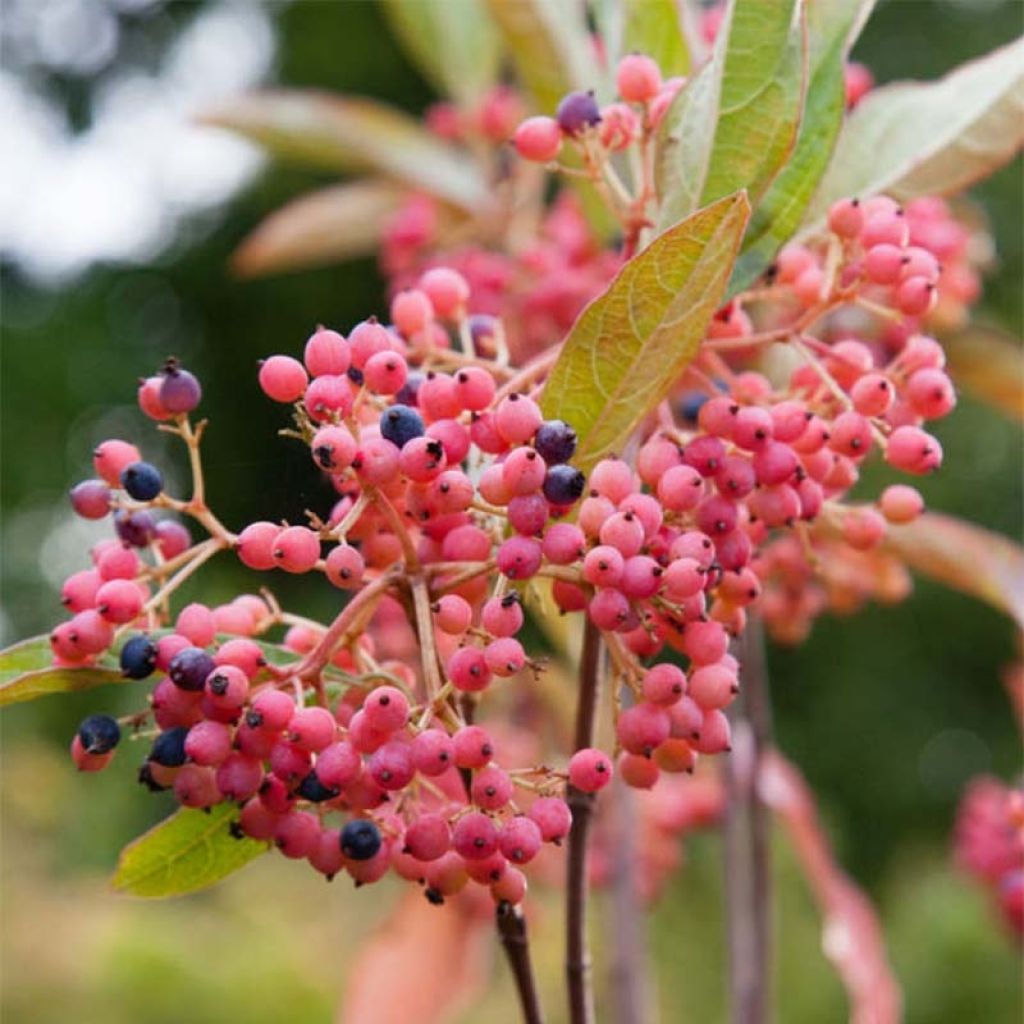
Viburnum nudum Pink Beauty
Viburnum nudum Pink Beauty
Viburnum nudum Pink Beauty
Viburno
Consegna a domicilio o a staffetta (a seconda delle dimensioni e della destinazione)
Importante: al momento della consegna, l'ufficio doganale del proprio Paese potrebbe addebitare dei dazi doganali.
Programmare la data di consegna,
e scegliere la data nel carrello
24 mesi garanzia di permuta su questa pianta
Altre informazioni
Garantiamo la qualità delle nostre piante per un intero ciclo di crescita e sostituiremo a nostre spese qualsiasi pianta che non si riprenda nelle normali condizioni climatiche e di impianto.
Questa pianta è adatta al mio giardino?
Creo il mio profilo Plantfit →
Descrizione del prodotto
Viburnum nudum 'Pink Beauty' is a delightful variety of naked viorne, attractive almost all year round. This shrub charms with its lovely small pink then violet berries that persist long on the branches in winter, its often semi-persistent foliage with splendid autumnal colours, but also with its somewhat Japanese-like habit, supported by tiered branches. With a moderate growth, both rustic, refined and colourful, 'Pink Beauty' is also a plant easy to grow in any good garden soil not too dry.
The viburnum with pedunculate cymes, often called naked viorne, is a shrub native to China. It now belongs to the Adoxaceae family, once part of the Caprifoliaceae. The 'Pink Beauty' cultivar, bred in the USA, stands out with a compact habit, but especially with its remarkable pink and violet fruiting. This shrub will not exceed 2 m in height by 1.5 m in spread. Its overall habit is erect, but the shrub develops in tiers, through spread out secondary branches. It blooms in June-July, in the form of large flat-topped corymbs, 10 to 15 cm in diameter; they are composed of small white flowers, sometimes pinkish. This slightly fragrant flowering is very melliferous and nectariferous. The fruiting is abundant and very decorative, in clusters where many round berries of a very bright pink are closely packed with ripe berries turning violet. Its foliage, deciduous to semi-persistent depending on winter severity, consists of large elliptical leaves of a beautiful shiny dark green. They turn to red, purple-violet, and brown in autumn.
Completely hardy, the 'Pink Beauty' naked viorne is an undemanding plant. It thrives in sunny or semi-shaded positions, and thrives in any ordinary soil rather moist, even slightly limestone. It is used as a standalone to attract attention in small gardens, in a pot on a terrace, in hedges or in borders in larger gardens. In a hedge, it can be associated with a variety of shrubs chosen for their autumn foliage (European fusain, garlic fusain, Cotinus, oakleaf hydrangea, Physocarpus), their spring flowering (mock oranges, deutzias, lilacs, Canadian serviceberry), or for their pretty fruiting (chokeberries, beautyberries, symphoricarpos, Chinese quince...). Its graceful inflorescences can be part of your spring bouquets and its fruit clusters will adorn festive tables in winter.
Segnala un errore nella descrizione del prodotto
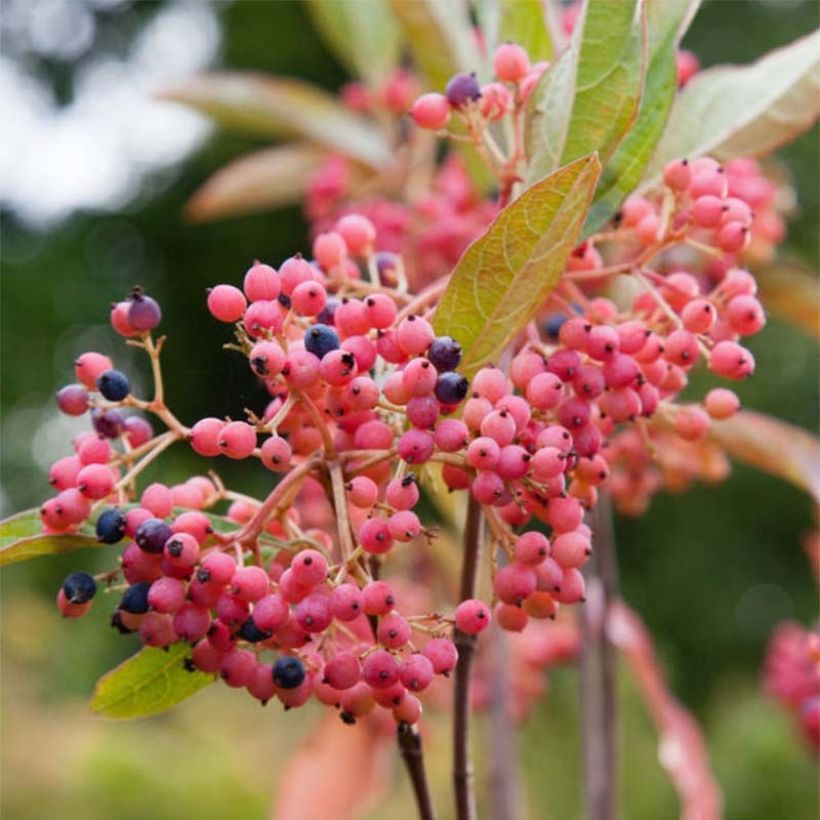
Viburnum nudum Pink Beauty in foto...
Porto
Fioritura
Fogliame
Piantagione e cura
The Viburnum nudum 'Pink Beauty' thrives in sunny or semi-shady locations. While it prefers a fresh, humus-rich, and light soil, it can adapt to any good garden soil that is not too dry, even slightly calcareous. If the soil is very calcareous, you can add heath soil to the planting substrate. Adequate watering after planting and during the following weeks will ensure good establishment. Light pruning can be done after flowering to maintain a compact shape, but this may reduce fruit production.
Quando piantare?
Per quale località?
Trattamenti
Questo articolo non è ancora stato recensito; sii il primo a condividere la tua esperienza.
Prodotti visualizzati di recente
Non hai trovato quello che cercavi?
La rusticità è la temperatura invernale più bassa che una pianta può sopportare senza subire gravi danni o addirittura morire. Tuttavia, la rusticità è influenzata dalla posizione (zona riparata, come un patio), dalla protezione (copertura invernale) e dal tipo di terreno (la rusticità è migliorata da un terreno ben drenato).
I periodi di semina indicati sul nostro sito web si riferiscono a Paesi e regioni all'interno della Zona USDA 8 (Francia, Regno Unito, Irlanda, Paesi Bassi).
Nelle zone più fredde (Scandinavia, Polonia, Austria...), ritardare le semine all'aperto di 3-4 settimane o seminare sotto vetro.
Nei climi più caldi (Italia, Spagna, Grecia, ecc.), anticipare la semina all'aperto di qualche settimana.
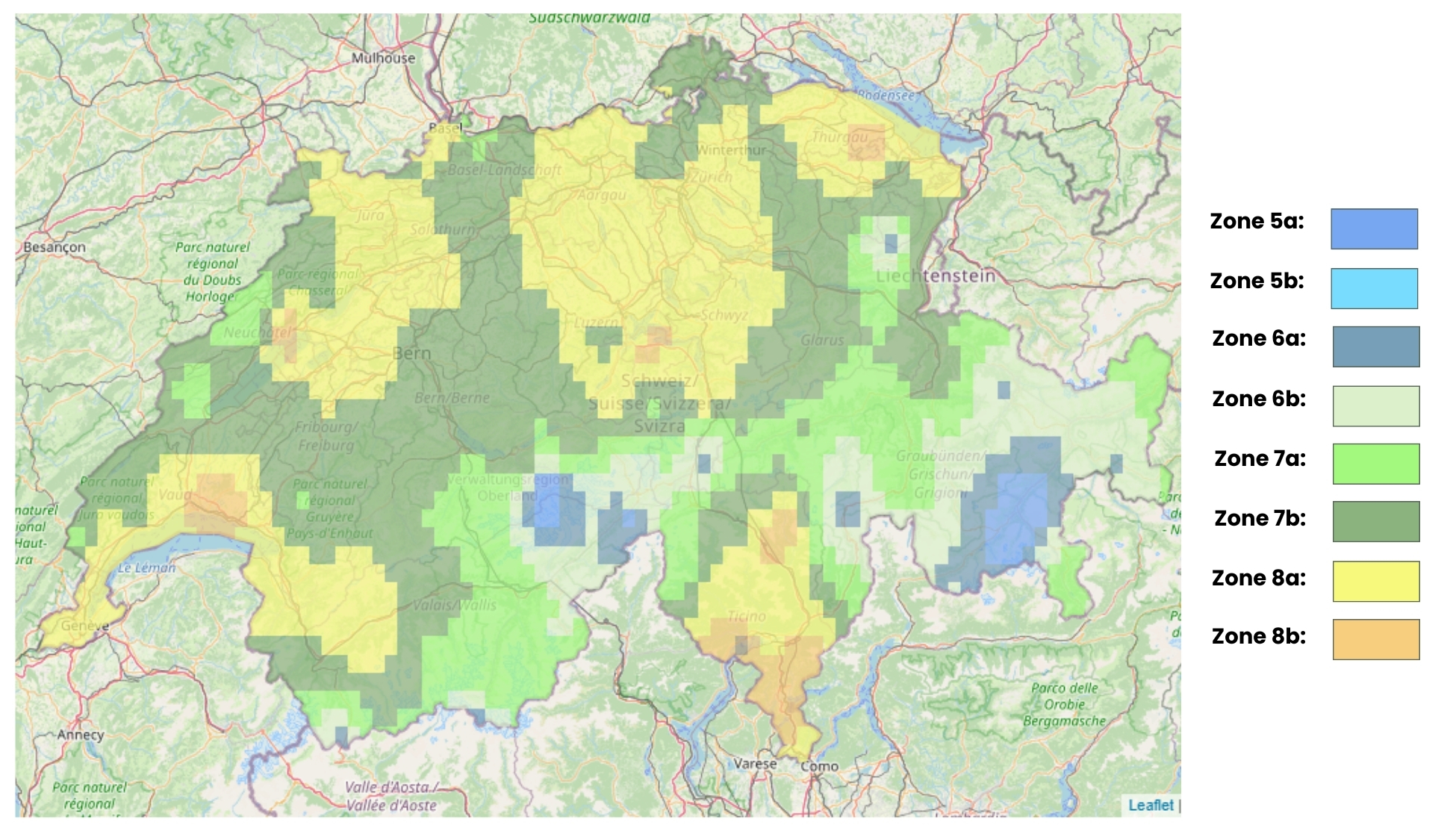
Il periodo di fioritura indicato sul nostro sito web si riferisce alle regioni situate nelle zone USDA 7b–8a (Altopiano centrale e Arco del Lemano: Zurigo, Berna, Basilea, Losanna, Ginevra).
Esso varierà a seconda del luogo di residenza:
- In Ticino e nelle valli meridionali (Lugano, Locarno, Bellinzona, Mendrisio), la fioritura sarà anticipata di 2-4 settimane rispetto alle date indicate, grazie a una marcata influenza mediterranea che mitiga gli inverni e rende le primavere particolarmente precoci.
- Nelle Alpi e nelle Prealpi (Davos, St. Moritz, Zermatt, Interlaken, Coira), la fioritura sarà ritardata di 4-6 settimane. Avverrà principalmente tra giugno e agosto a seconda dell'altitudine.
Il periodo di piantagione indicato sul nostro sito web si applica alle regioni situate nelle zone USDA 7b–8a (Altopiano centrale e Arco del Lemano: Zurigo, Berna, Basilea, Losanna, Ginevra). Esso varia a seconda del luogo di residenza:
- In Ticino e nelle valli meridionali (Lugano, Locarno, Bellinzona, Mendrisio), è preferibile piantare in autunno (ottobre–novembre) o alla fine dell'inverno (febbraio–marzo), evitando i mesi estivi in cui il caldo e la siccità possono costituire un rischio per le piantagioni recenti.
- Nelle Alpi e nelle Prealpi (Davos, Saint-Moritz, Zermatt, Interlaken, Coira), è preferibile piantare in tarda primavera (maggio-giugno), una volta scongiurato il rischio di gelate tardive, oppure in fine estate (agosto), prima che le gelate precoci si verifichino già a settembre in altitudine.
Il periodo di raccolta indicato sul nostro sito web si riferisce ai Paesi e alle regioni della zona USDA 8 (Francia, Inghilterra, Irlanda, Paesi Bassi).
Nelle zone più fredde (Scandinavia, Polonia, Austria...) la raccolta di frutta e verdura potrebbe essere ritardata di 3-4 settimane.
Nelle zone più calde (Italia, Spagna, Grecia, ecc.), la raccolta avverrà probabilmente prima, a seconda delle condizioni meteorologiche.
Nei climi temperati, la potatura degli arbusti a fioritura primaverile (forsizia, spiree, ecc.) deve essere effettuata subito dopo la fioritura.
La potatura degli arbusti a fioritura estiva (lillà indiano, perovskia, ecc.) può essere effettuata in inverno o in primavera.
Nelle regioni fredde e con piante sensibili al gelo, evitate di potare troppo presto quando possono ancora verificarsi forti gelate.
Paese di consegna e lingua
La tua posizione sembra essere:
La tua posizione è:
Per godere della migliore esperienza sul nostro sito, è possibile cambiare:
Paese di consegna:
-
 Austria
-
 Belgio
-
 Bosnia ed Erzegovina
-
 Bulgaria
-
 Cechia
-
 Cipro
Cipro
-
 Croazia
-
 Danimarca
-
 Estonia
-
 Finlandia
-
 Francia
-
 Germania
-
 Grecia
-
 Irlanda
-
 Islanda
-
 Italia
-
 Lettonia
-
 Liechtenstein
-
 Lituania
-
 Lussemburgo
-
 Malta
Malta
-
 Paesi Bassi
-
 Polonia
-
 Portogallo
-
 Romania
-
 Serbia
-
 Slovacchia
-
 Slovenia
-
 Spagna
-
 Svezia
-
 Svizzera
-
 Ungheria
Lingua:
-
Francese
-
 Inglese
-
Spagnolo
-
Italiano
-
Tedesco
-
Portoghese
-
Olandese
-
Finlandese
Il mio account
Salve
I miei elenchi di preferiti
Il mio carrello
Accesso / Registrazione
Sei già cliente?
Questo modulo è protetto da reCAPTCHA - si applicano l'informativa sulla privacy e i termini di servizio.
Non sei ancora cliente?
Crea il tuo account per poter seguire il tuo ordine, accedere al nostro servizio clienti e, se lo desideri, approfittare delle nostre prossime offerte.