Viburnum plicatum Shasta
Viburnum plicatum Shasta
Viburnum plicatum Shasta
Viburnum plicatum Shasta
Viburnum plicatum mariesii Shasta
Viburno
Consegna a domicilio o a staffetta (a seconda delle dimensioni e della destinazione)
Importante: al momento della consegna, l'ufficio doganale del proprio Paese potrebbe addebitare dei dazi doganali.
Programmare la data di consegna,
e scegliere la data nel carrello
24 mesi garanzia di permuta su questa pianta
Altre informazioni
Garantiamo la qualità delle nostre piante per un intero ciclo di crescita e sostituiremo a nostre spese qualsiasi pianta che non si riprenda nelle normali condizioni climatiche e di impianto.

Questa pianta è adatta al mio giardino?
Creo il mio profilo Plantfit →
Descrizione del prodotto
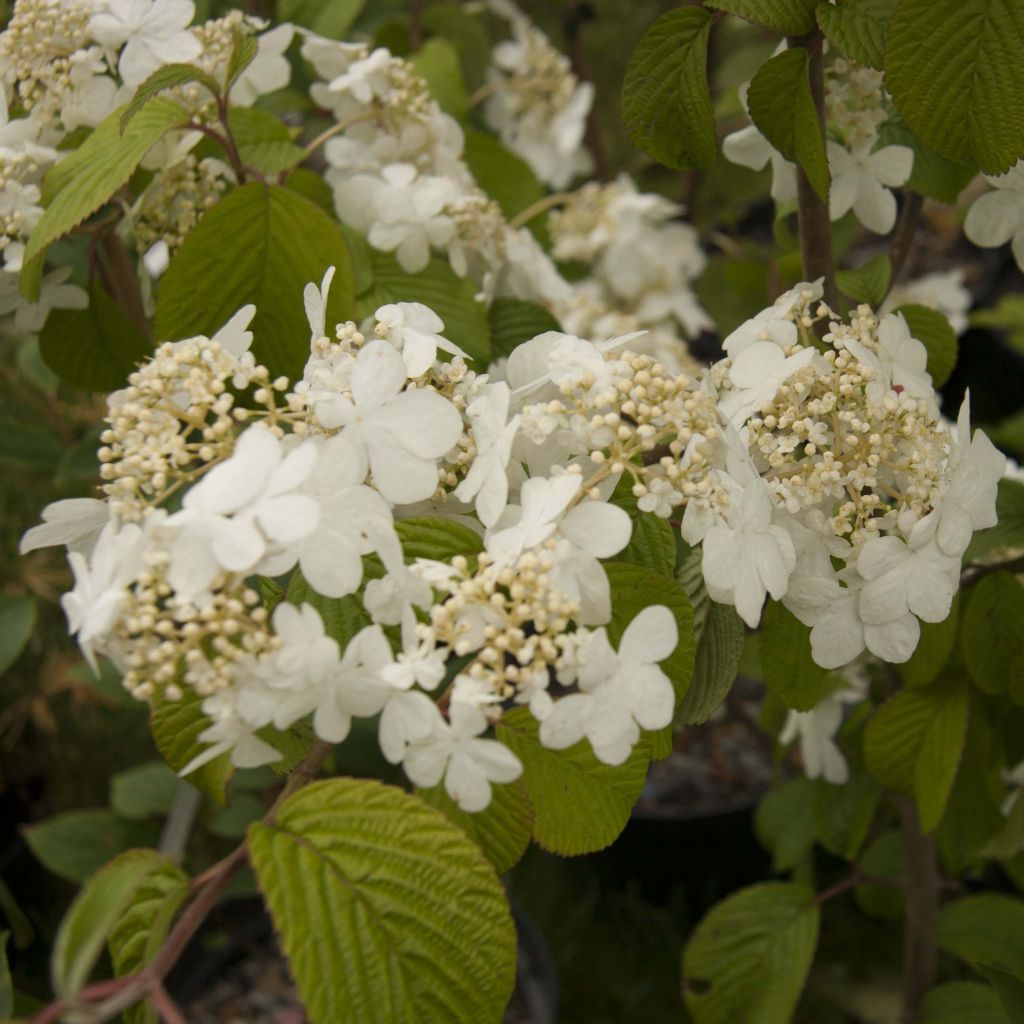
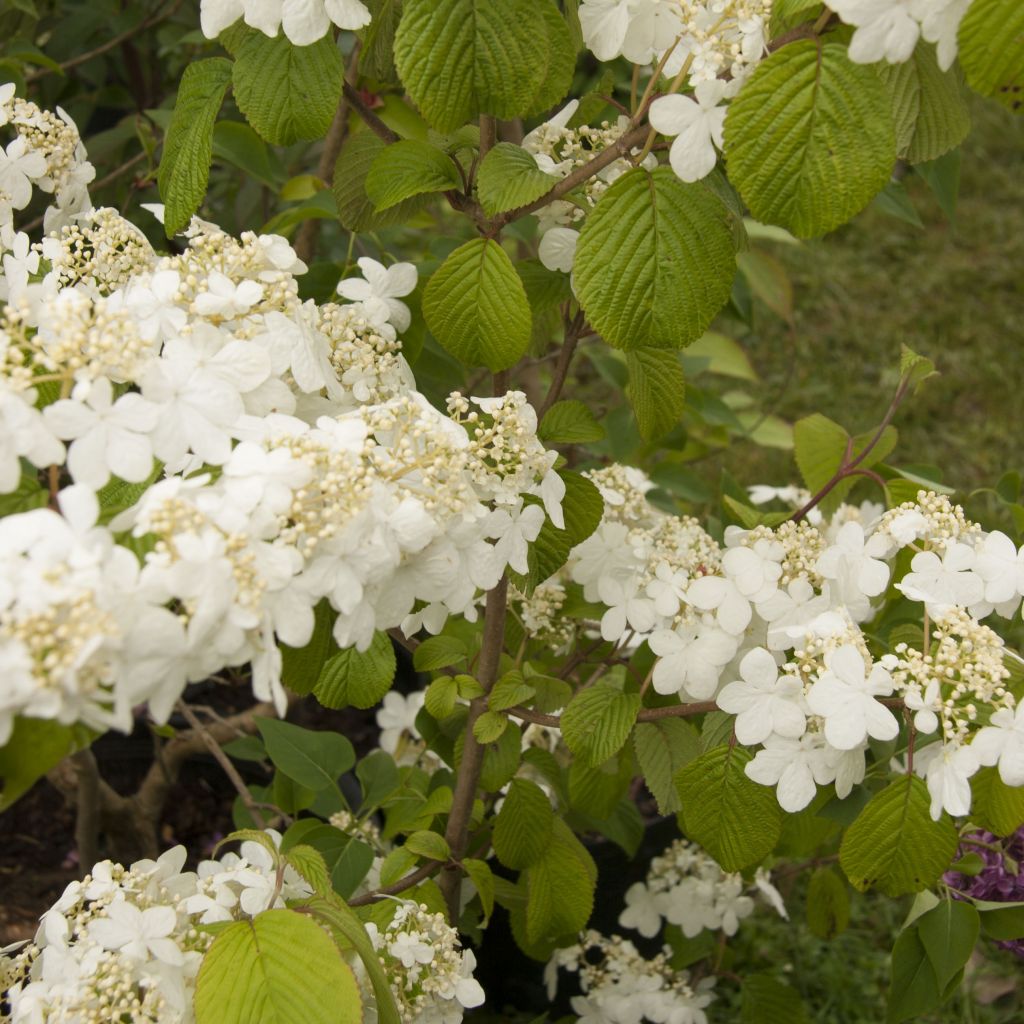
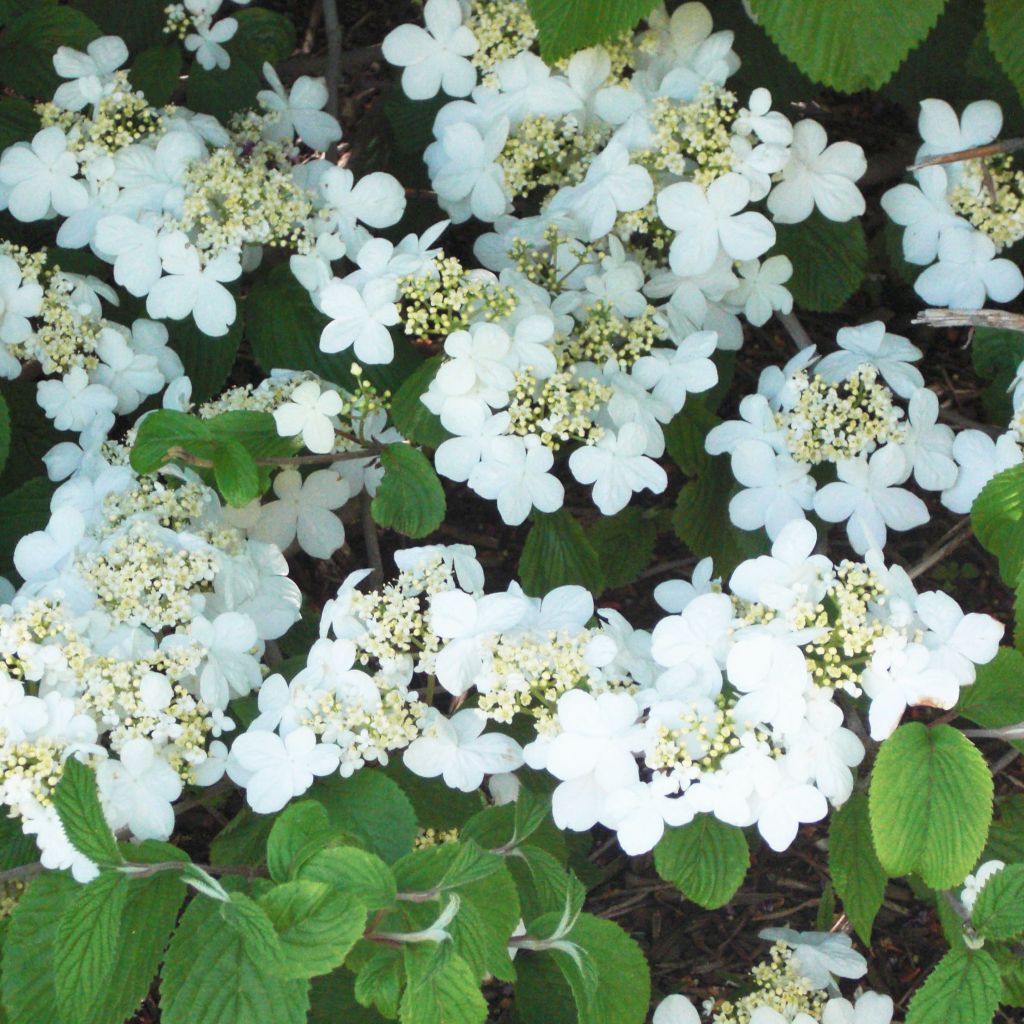
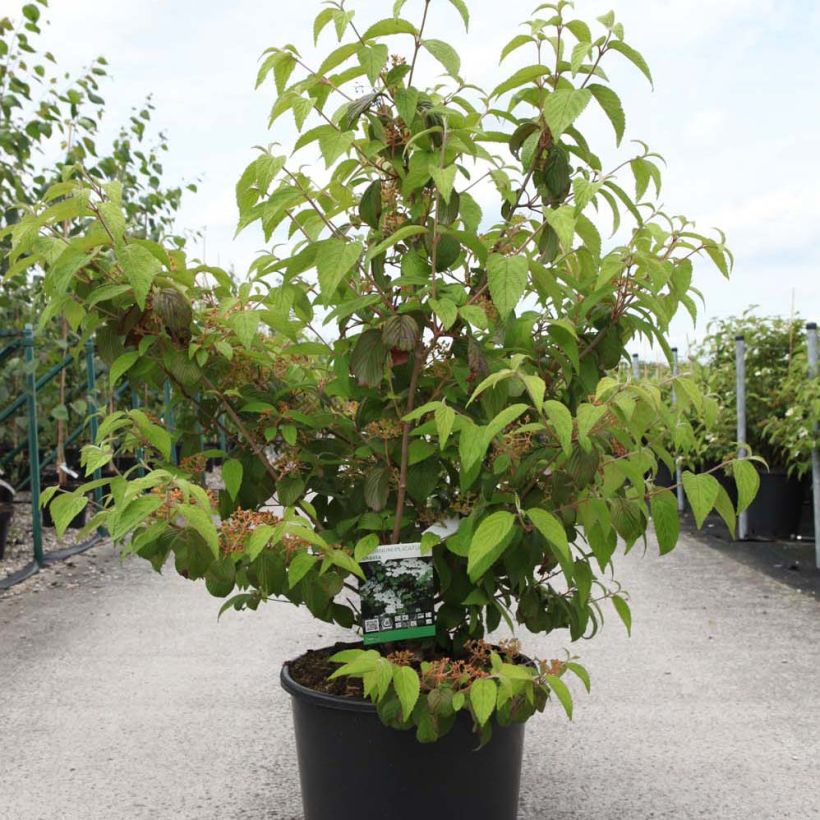
Viburnum plicatum 'Shasta' is a variety of Chinese viorne with a low and particularly spreading habit, much wider than it is tall, remarkably tiered. It is unique when it blooms : its corymbs of large white flowers open en masse and in double rows along the branches, as if the shrub were weighed down with snow in the middle of June. The deciduous and satiny foliage takes on very beautiful purplish colors in autumn. This viorne, with its hydrangea-like appearance, outshines them with its flowering and prefers sunny exposures. It will thrive in a soil that is fresh and low in limestone.
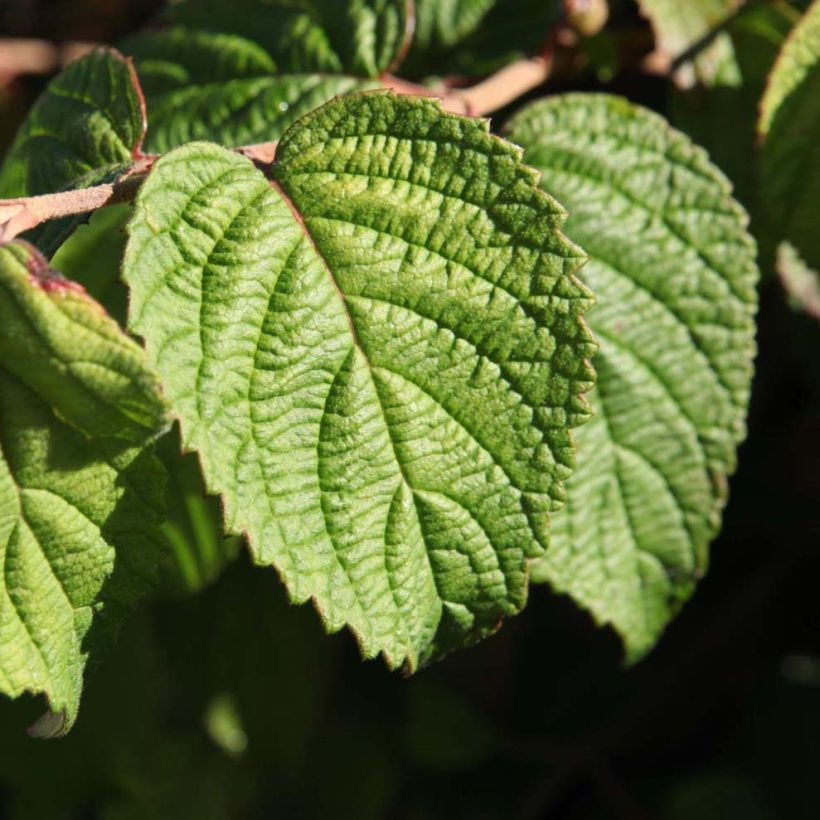
The Chinese viorne is a deciduous shrub of the Adoxaceae family (formerly classified in the Caprifoliaceae family), native to China and Japan. 'Shasta' is an old horticultural selection introduced in 1979 by the American National Arboretum. This variety stands out from the type by its very accentuated, spreading habit, and its less significant growth. With a horizontal branching, the plant presents a silhouette that is both structured and light, making it attractive all year round, even in winter. At maturity, it will reach about 1.5 m in height by 2.5 m in width, with a rather slow growth. Flowering occurs in May and continues until June. The inflorescences in flattened cymes, 15 cm wide, develop in large numbers and in two rows on the top of the branches. They consist of a peripheral crown of large sterile flowers, well developed, with white elliptical tepals, surrounding small fertile flowers in the shape of beige buds and then white-greenish. The pollinated fertile flowers turn into small red and then black berries at maturity, clustered in generous bunches. The deciduous leaves measure 5 to 8 cm in length, are oval in shape, tapered, strongly veined, with regularly serrated edges. They somewhat resemble those of the hazelnut trees. Their fairly dark green colour is satiny on the upper side, with the underside being more pubescent. The foliage takes on sumptuous colours in autumn
This particularly ornamental shrub deserves a special place in a small garden or at the centre of a mixed border that will highlight summer and autumn blooms, beautiful fruiting, and graphic foliage to not overshadow its beauty. It will be appreciated even in winter, due to its regularly tiered, beautifully stylised branching, with a slightly Japanese appearance. Plant this Viburnum 'Shasta' with other flowering shrubs, such as a sacred bambou, a 'Black Lace' elderberry, a Clerodendrum trichotomum, a Fothergilla, a Berberis thunbergii 'Atropurpurea' whose purple foliage will enhance its pinkish inflorescences and red fruits. It can also be associated with compact photinias, elaeagnus, camellias, pieris, or hydrangeas in non-calcareous soil, the choice is vast. It also deserves to be placed in isolation in a small garden or at the centre of a massif of low perennials and grasses, due to its beautiful presence in winter.
Segnala un errore nella descrizione del prodotto
Viburnum plicatum Shasta in foto...
Porto
Fioritura
Fogliame
Piantagione e cura
Viburnum plicatum 'Shasta' is grown in full sun or partial shade. Place it from November to May, frost-free, in any type of soil without too much limestone and not too dry, preferably moist and humus-rich. This easy-to-grow shrub has the advantage of requiring little maintenance. The viburnum is often attacked by aphids without great danger. After flowering, you can prune the shrub. Prune sparingly to maintain the naturally tabular shape. Remove branches that compromise the plant's symmetry.
Quando piantare?
Per quale località?
Trattamenti
Questo articolo non è ancora stato recensito; sii il primo a condividere la tua esperienza.
Prodotti visualizzati di recente
Non hai trovato quello che cercavi?
La rusticità è la temperatura invernale più bassa che una pianta può sopportare senza subire gravi danni o addirittura morire. Tuttavia, la rusticità è influenzata dalla posizione (zona riparata, come un patio), dalla protezione (copertura invernale) e dal tipo di terreno (la rusticità è migliorata da un terreno ben drenato).
I periodi di semina indicati sul nostro sito web si riferiscono a Paesi e regioni all'interno della Zona USDA 8 (Francia, Regno Unito, Irlanda, Paesi Bassi).
Nelle zone più fredde (Scandinavia, Polonia, Austria...), ritardare le semine all'aperto di 3-4 settimane o seminare sotto vetro.
Nei climi più caldi (Italia, Spagna, Grecia, ecc.), anticipare la semina all'aperto di qualche settimana.
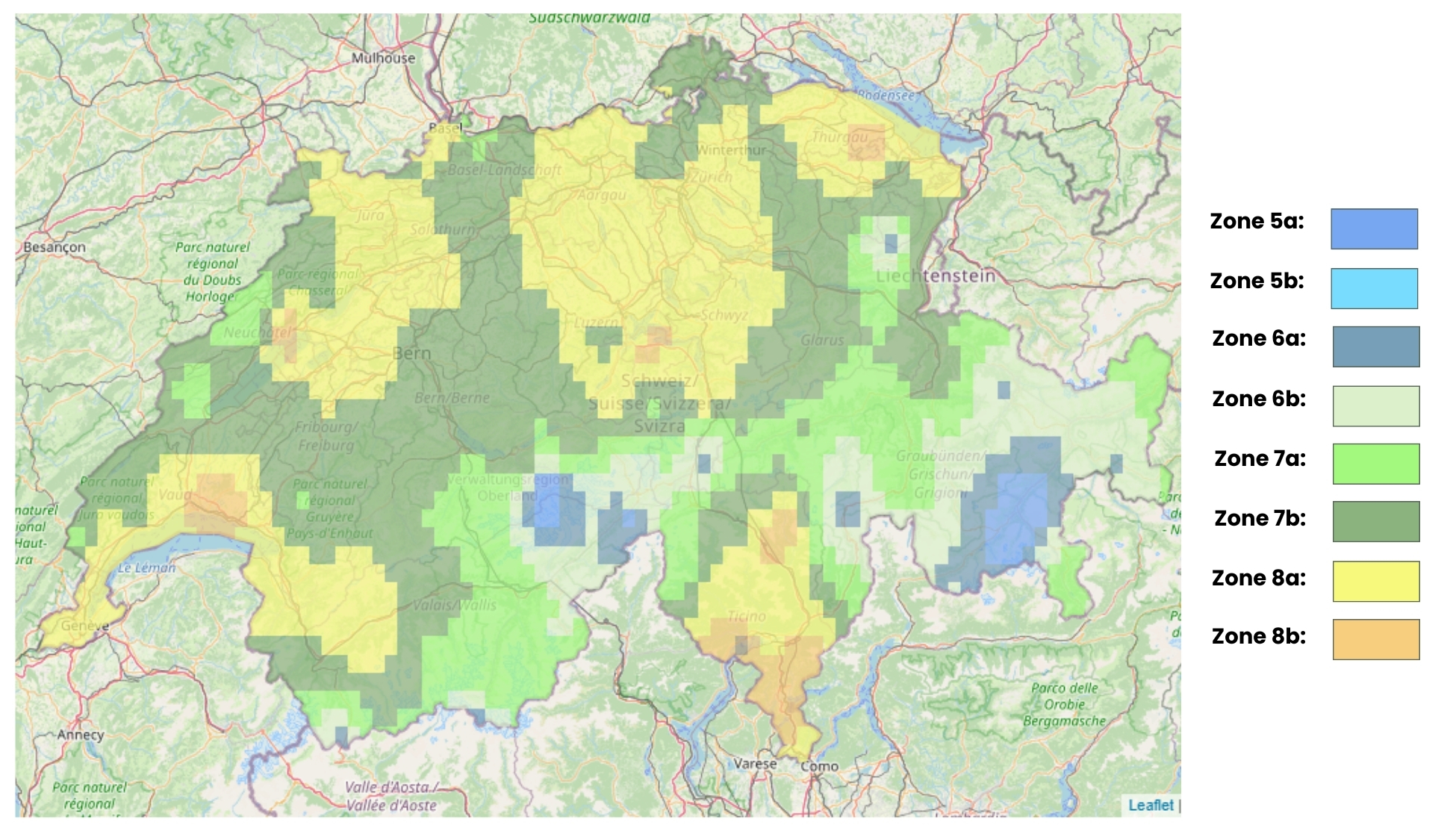
Il periodo di fioritura indicato sul nostro sito web si riferisce alle regioni situate nelle zone USDA 7b–8a (Altopiano centrale e Arco del Lemano: Zurigo, Berna, Basilea, Losanna, Ginevra).
Esso varierà a seconda del luogo di residenza:
- In Ticino e nelle valli meridionali (Lugano, Locarno, Bellinzona, Mendrisio), la fioritura sarà anticipata di 2-4 settimane rispetto alle date indicate, grazie a una marcata influenza mediterranea che mitiga gli inverni e rende le primavere particolarmente precoci.
- Nelle Alpi e nelle Prealpi (Davos, St. Moritz, Zermatt, Interlaken, Coira), la fioritura sarà ritardata di 4-6 settimane. Avverrà principalmente tra giugno e agosto a seconda dell'altitudine.
Il periodo di piantagione indicato sul nostro sito web si applica alle regioni situate nelle zone USDA 7b–8a (Altopiano centrale e Arco del Lemano: Zurigo, Berna, Basilea, Losanna, Ginevra). Esso varia a seconda del luogo di residenza:
- In Ticino e nelle valli meridionali (Lugano, Locarno, Bellinzona, Mendrisio), è preferibile piantare in autunno (ottobre–novembre) o alla fine dell'inverno (febbraio–marzo), evitando i mesi estivi in cui il caldo e la siccità possono costituire un rischio per le piantagioni recenti.
- Nelle Alpi e nelle Prealpi (Davos, Saint-Moritz, Zermatt, Interlaken, Coira), è preferibile piantare in tarda primavera (maggio-giugno), una volta scongiurato il rischio di gelate tardive, oppure in fine estate (agosto), prima che le gelate precoci si verifichino già a settembre in altitudine.
Il periodo di raccolta indicato sul nostro sito web si riferisce ai Paesi e alle regioni della zona USDA 8 (Francia, Inghilterra, Irlanda, Paesi Bassi).
Nelle zone più fredde (Scandinavia, Polonia, Austria...) la raccolta di frutta e verdura potrebbe essere ritardata di 3-4 settimane.
Nelle zone più calde (Italia, Spagna, Grecia, ecc.), la raccolta avverrà probabilmente prima, a seconda delle condizioni meteorologiche.
Nei climi temperati, la potatura degli arbusti a fioritura primaverile (forsizia, spiree, ecc.) deve essere effettuata subito dopo la fioritura.
La potatura degli arbusti a fioritura estiva (lillà indiano, perovskia, ecc.) può essere effettuata in inverno o in primavera.
Nelle regioni fredde e con piante sensibili al gelo, evitate di potare troppo presto quando possono ancora verificarsi forti gelate.
Paese di consegna e lingua
La tua posizione sembra essere:
La tua posizione è:
Per godere della migliore esperienza sul nostro sito, è possibile cambiare:
Paese di consegna:
-
 Austria
-
 Belgio
-
 Bosnia ed Erzegovina
-
 Bulgaria
-
 Cechia
-
 Cipro
Cipro
-
 Croazia
-
 Danimarca
-
 Estonia
-
 Finlandia
-
 Francia
-
 Germania
-
 Grecia
-
 Irlanda
-
 Islanda
-
 Italia
-
 Lettonia
-
 Liechtenstein
-
 Lituania
-
 Lussemburgo
-
 Malta
Malta
-
 Paesi Bassi
-
 Polonia
-
 Portogallo
-
 Romania
-
 Serbia
-
 Slovacchia
-
 Slovenia
-
 Spagna
-
 Svezia
-
 Svizzera
-
 Ungheria
Lingua:
-
Francese
-
 Inglese
-
Spagnolo
-
Italiano
-
Tedesco
-
Portoghese
-
Olandese
-
Finlandese
Il mio account
Salve
I miei elenchi di preferiti
Il mio carrello
Accesso / Registrazione
Sei già cliente?
Questo modulo è protetto da reCAPTCHA - si applicano l'informativa sulla privacy e i termini di servizio.
Non sei ancora cliente?
Crea il tuo account per poter seguire il tuo ordine, accedere al nostro servizio clienti e, se lo desideri, approfittare delle nostre prossime offerte.