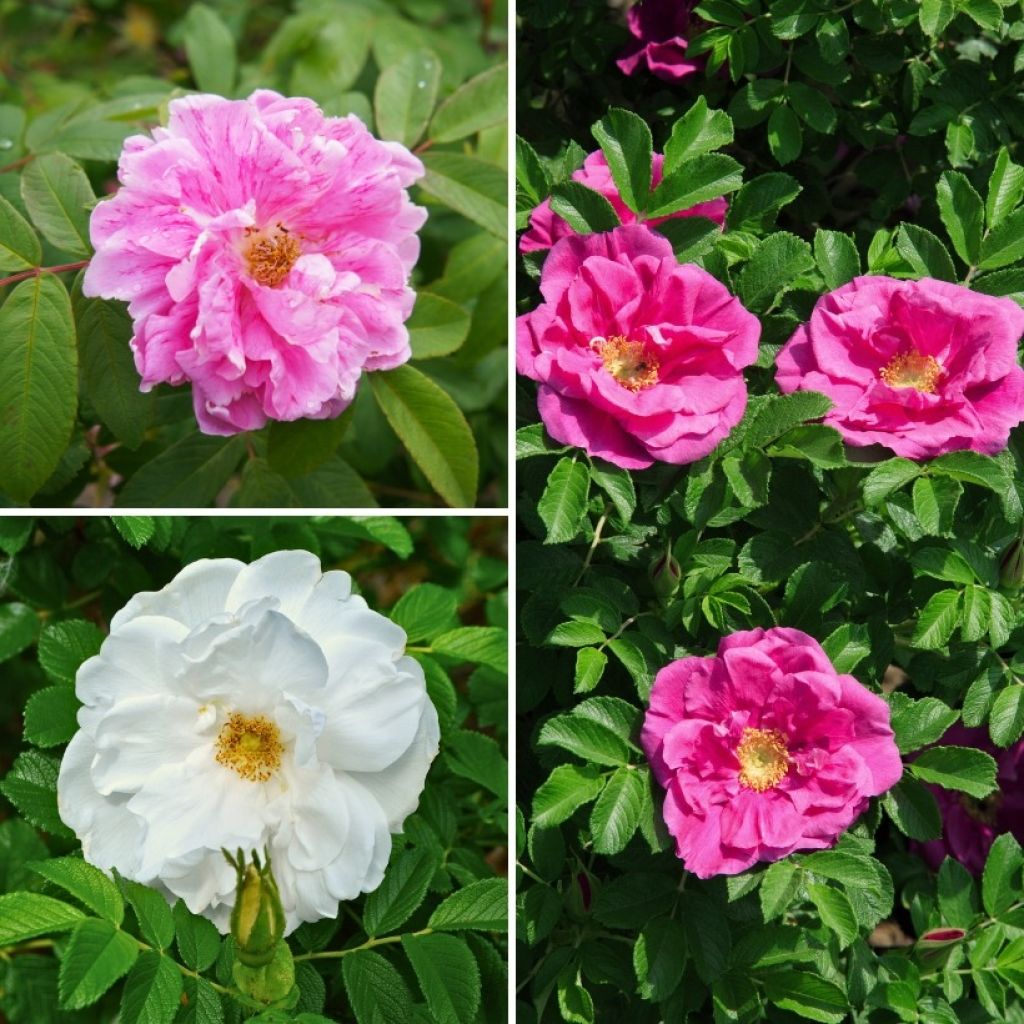
Collezione di Rose rugose a fiori doppi
Collezione di Rose rugose a fiori doppi
Rosa (x) rugosa Thérèse Bugnet, Blanc Double de Coubert, Roseraie de l’Haÿ
Rosa rugosa
Consegna a domicilio o a staffetta (a seconda delle dimensioni e della destinazione)
Importante: al momento della consegna, l'ufficio doganale del proprio Paese potrebbe addebitare dei dazi doganali.
Programmare la data di consegna,
e scegliere la data nel carrello
6 mesi garanzia di permuta su questa pianta
Altre informazioni
Garantiamo la qualità delle nostre piante per un intero ciclo di crescita e sostituiremo a nostre spese qualsiasi pianta che non si riprenda nelle normali condizioni climatiche e di impianto.
Descrizione del prodotto
Create in your garden a romantic and fragrant free hedge with our collection of double-flowered rose rugosa. These deciduous shrubs, very hardy, with waffled foliage, offer a generous and pleasantly scented flowering from May until the first frosts. Hybrids of Rosa rugosa, they are naturally very robust and disease-resistant. Suitable for cold climates, these roses also withstand dry summers once well rooted. Plant them in full sun to enjoy their charm and a free hedge with a country look. This low-maintenance hedge will evolve with the seasons, while providing a valuable refuge for birds and beneficial insects.
The collection consists of:
1 x Rose Rugosa 'Thérèse Bugnet': a renowned old rose for its semi-double bright pink flowers with a sweet scent. Its dark green foliage takes on beautiful yellow and reddish autumnal hues. It reaches a height of 1.80 m and a width of 1.50 m.
1 x Rose Rugosa 'Blanc Double de Coubert': this hardy rose offers large double white flowers with timeless elegance. Intensely fragrant, they are highlighted by shiny green foliage. Its continuous flowering illuminates the garden until the first frosts. Height and width: about 1.50 m.
1 x Rose Rugosa 'Roseraie de l’Haÿ': a garden classic, known for its purple flowers with velvety petals and intense fragrance. Its spectacular flowering extends throughout the beautiful season. Very vigorous and robust, it reaches up to 2 m in height and 1.80 m in width.
These bare root rugosa roses are ideally planted in autumn, from September to November, for good rooting before winter. They appreciate sunny exposures, but tolerate partial shade in hot and dry climates. Plant them in well-drained soil, even poor or sandy, enriched with compost at planting to promote their recovery.
Place the 'Roseraie de l’Haÿ' rose, the tallest, at the back or in the centre if the hedge is visible from both sides. Then place 'Thérèse Bugnet' at mid-height and 'Blanc Double de Coubert', more compact, at the front. Respect a spacing of 1 to 1.5 m between each rose to give them enough space to flourish while creating a dense and protective hedge. Count 3 plants for 5 to 6 m of hedge.
Water generously after planting and mulch to retain moisture and limit weeds. These robust roses require no maintenance and tolerate light pruning at the end of winter to maintain their shape and encourage abundant flowering.
To create a balanced romantic hedge with your rugosa roses, mix them with the Weigela florida ‘Alexandra’ with dark foliage and dark pink bell-shaped flowers in spring and early summer. Plant two specimens alternately with the roses. Add the Spiraea vanhouttei (Bridal Wreath Spirea), whose cascades of small white flowers in spring will brighten the whole. Install two plants at regular intervals. Finally, the Cornus alba ‘Elegantissima’ (Variegated Dogwood) will bring a touch of light with its variegated foliage and reddish branches in winter. Plant two in the middle or on the sides of the hedge for a luminous effect and decorative interest throughout the year. These hardy and undemanding shrubs, together with your roses, form a natural hedge covering 12 to 15 m².
Segnala un errore nella descrizione del prodotto
Porto
Fioritura
Fogliame
Piantagione e cura
Roses prefer a sunny location (at least 4 to 5 hours of sun per day) but sheltered from the scorching midday sun and strong winds. Roses appreciate loose, permeable, and humus-rich soils. They prefer slightly acidic soil, but will adapt in any garden provided the soil is well worked and rich enough. To plant your rose in a pot, work your soil to a depth of 40 cm by crumbling the soil well and placing a base amendment such as dried blood or dehydrated horn at the bottom of the planting hole, position your plant by covering the top of the root ball with 3 cm of soil, fill in and water generously to eliminate air pockets. In dry weather, it is necessary to water regularly for a few weeks to facilitate root growth. Also, remember to provide your rose with special rose fertiliser that stimulates plant flowering.
Quando piantare?
Per quale località?
Trattamenti
Questo articolo non è ancora stato recensito; sii il primo a condividere la tua esperienza.
Prodotti visualizzati di recente
Non hai trovato quello che cercavi?
La rusticità è la temperatura invernale più bassa che una pianta può sopportare senza subire gravi danni o addirittura morire. Tuttavia, la rusticità è influenzata dalla posizione (zona riparata, come un patio), dalla protezione (copertura invernale) e dal tipo di terreno (la rusticità è migliorata da un terreno ben drenato).
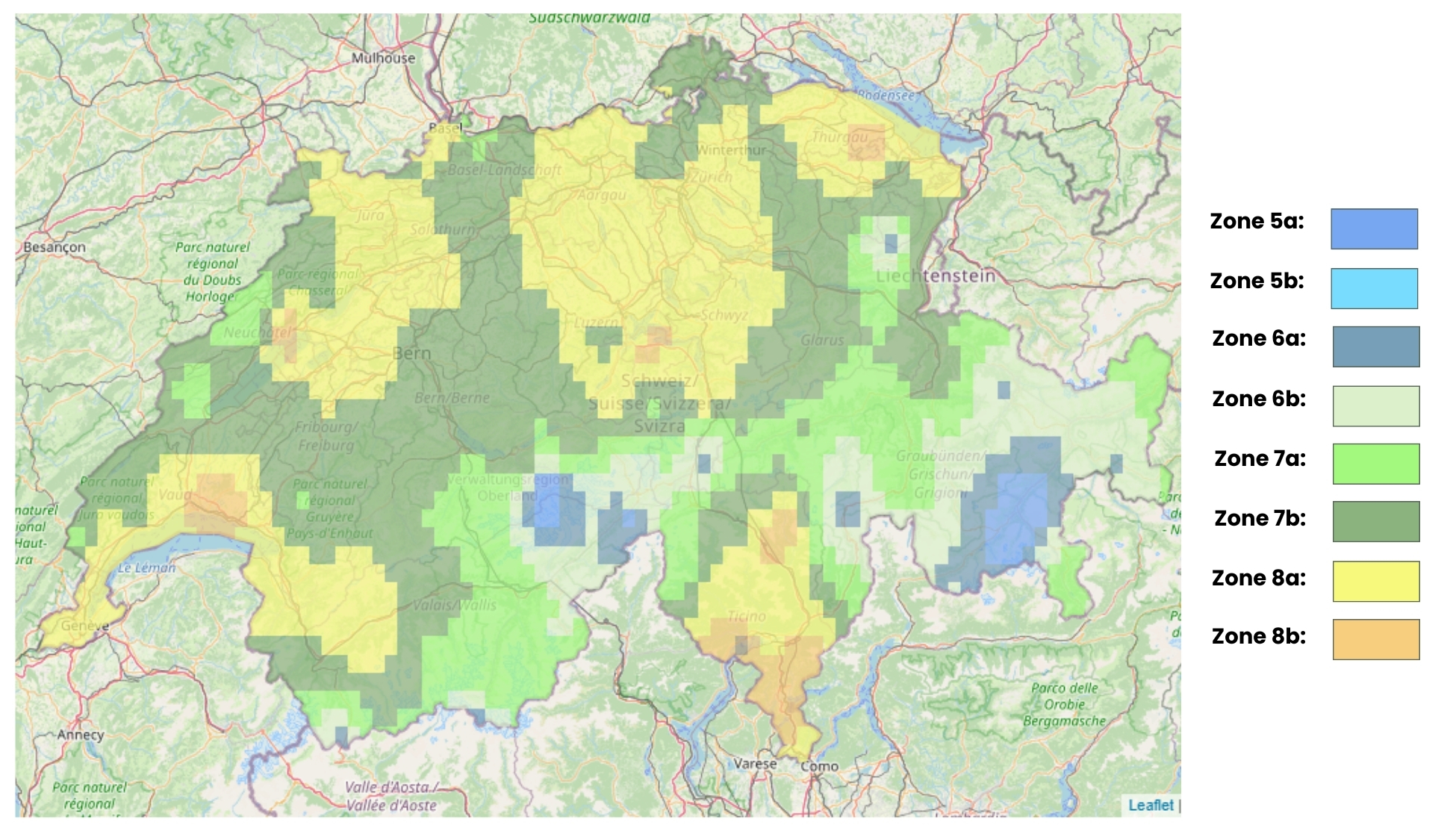
I periodi di semina indicati sul nostro sito web si riferiscono a Paesi e regioni all'interno della Zona USDA 8 (Francia, Regno Unito, Irlanda, Paesi Bassi).
Nelle zone più fredde (Scandinavia, Polonia, Austria...), ritardare le semine all'aperto di 3-4 settimane o seminare sotto vetro.
Nei climi più caldi (Italia, Spagna, Grecia, ecc.), anticipare la semina all'aperto di qualche settimana.
Il periodo di fioritura indicato sul nostro sito web si riferisce alle regioni situate nelle zone USDA 7b–8a (Altopiano centrale e Arco del Lemano: Zurigo, Berna, Basilea, Losanna, Ginevra).
Esso varierà a seconda del luogo di residenza:
- In Ticino e nelle valli meridionali (Lugano, Locarno, Bellinzona, Mendrisio), la fioritura sarà anticipata di 2-4 settimane rispetto alle date indicate, grazie a una marcata influenza mediterranea che mitiga gli inverni e rende le primavere particolarmente precoci.
- Nelle Alpi e nelle Prealpi (Davos, St. Moritz, Zermatt, Interlaken, Coira), la fioritura sarà ritardata di 4-6 settimane. Avverrà principalmente tra giugno e agosto a seconda dell'altitudine.
Il periodo di piantagione indicato sul nostro sito web si applica alle regioni situate nelle zone USDA 7b–8a (Altopiano centrale e Arco del Lemano: Zurigo, Berna, Basilea, Losanna, Ginevra). Esso varia a seconda del luogo di residenza:
- In Ticino e nelle valli meridionali (Lugano, Locarno, Bellinzona, Mendrisio), è preferibile piantare in autunno (ottobre–novembre) o alla fine dell'inverno (febbraio–marzo), evitando i mesi estivi in cui il caldo e la siccità possono costituire un rischio per le piantagioni recenti.
- Nelle Alpi e nelle Prealpi (Davos, Saint-Moritz, Zermatt, Interlaken, Coira), è preferibile piantare in tarda primavera (maggio-giugno), una volta scongiurato il rischio di gelate tardive, oppure in fine estate (agosto), prima che le gelate precoci si verifichino già a settembre in altitudine.
Il periodo di raccolta indicato sul nostro sito web si riferisce ai Paesi e alle regioni della zona USDA 8 (Francia, Inghilterra, Irlanda, Paesi Bassi).
Nelle zone più fredde (Scandinavia, Polonia, Austria...) la raccolta di frutta e verdura potrebbe essere ritardata di 3-4 settimane.
Nelle zone più calde (Italia, Spagna, Grecia, ecc.), la raccolta avverrà probabilmente prima, a seconda delle condizioni meteorologiche.
Nei climi temperati, la potatura degli arbusti a fioritura primaverile (forsizia, spiree, ecc.) deve essere effettuata subito dopo la fioritura.
La potatura degli arbusti a fioritura estiva (lillà indiano, perovskia, ecc.) può essere effettuata in inverno o in primavera.
Nelle regioni fredde e con piante sensibili al gelo, evitate di potare troppo presto quando possono ancora verificarsi forti gelate.
Paese di consegna e lingua
La tua posizione sembra essere:
La tua posizione è:
Per godere della migliore esperienza sul nostro sito, è possibile cambiare:
Paese di consegna:
-
 Austria
-
 Belgio
-
 Bosnia ed Erzegovina
-
 Bulgaria
-
 Cechia
-
 Cipro
Cipro
-
 Croazia
-
 Danimarca
-
 Estonia
-
 Finlandia
-
 Francia
-
 Germania
-
 Grecia
-
 Irlanda
-
 Islanda
-
 Italia
-
 Lettonia
-
 Liechtenstein
-
 Lituania
-
 Lussemburgo
-
 Malta
Malta
-
 Paesi Bassi
-
 Polonia
-
 Portogallo
-
 Romania
-
 Serbia
-
 Slovacchia
-
 Slovenia
-
 Spagna
-
 Svezia
-
 Svizzera
-
 Ungheria
Lingua:
-
Francese
-
 Inglese
-
Spagnolo
-
Italiano
-
Tedesco
-
Portoghese
-
Olandese
-
Finlandese
Il mio account
Salve
I miei elenchi di preferiti
Il mio carrello
Accesso / Registrazione
Sei già cliente?
Questo modulo è protetto da reCAPTCHA - si applicano l'informativa sulla privacy e i termini di servizio.
Non sei ancora cliente?
Crea il tuo account per poter seguire il tuo ordine, accedere al nostro servizio clienti e, se lo desideri, approfittare delle nostre prossime offerte.